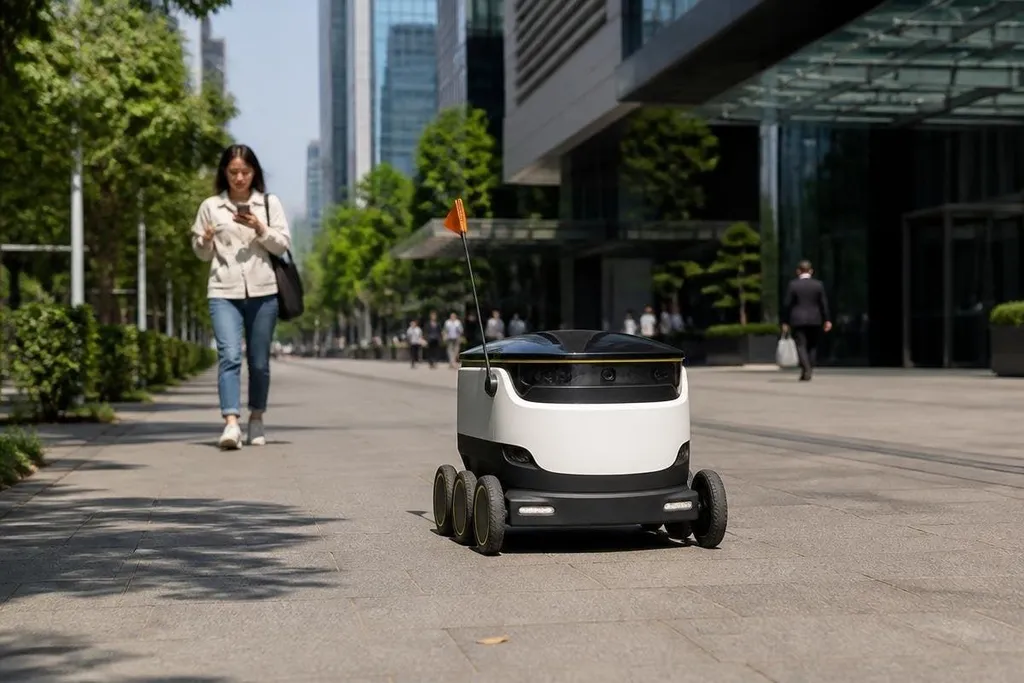
A smart city robot may deliver a package, wash a public floor, inspect a bridge, or guide people through a station. Its value comes from the task it can do safely and repeatedly, not from the word “smart” on its label.
Cities are testing these systems because public work covers large areas, fixed routes, and repeated checks. The harder question is where a robot helps people without blocking streets, creating new safety risks, or shifting work into a control room.
Quick read
- Robots fit best with repeated tasks in known places.
- Sensors help a robot detect people, objects, and changes in its path.
- City rules, human support, and repair plans matter as much as the robot.
What smart city robots actually do
The term covers several types of machines. A mobile robot can move through a street, station, campus, or building. A robotic arm can sort items or handle waste at a fixed site. A drone can inspect areas that are hard or unsafe for a person to reach.
These systems share a basic job: they collect information, make a limited decision, then move or act. Cameras, LiDAR, GPS, and other sensors help the robot judge its position and detect obstacles.
Software turns that input into a route or task, while a remote operator may step in when the robot reaches a situation it cannot handle.
That last part matters. A busy sidewalk doesn't behave like a factory floor. People stop without warning, dogs cross paths, bicycles move at different speeds, and road work can change the route during the day. On a mapped site, the robot may work well, but public space can require slower movement and more human checks.
Where the change reaches daily life
The most practical uses are tied to work that happens again and again. Cleaning machines can cover set areas. Inspection systems can check signs, pipes, roads, or structures and send images to a team. Delivery robots can move goods over a defined route when the site rules allow it.
The effect on residents depends on the handoff. If a robot spots a blocked drain and sends a clear image to a maintenance team, the city gains useful information. If it stops in the middle of a footpath and waits for help, people see the cost of a poor setup instead.
This is why local rules shape the experience. A city may need limits on speed, operating hours, access to sidewalks, data storage, and the people responsible when a machine causes harm. These details rarely appear in a product video, yet they decide whether the system can work outside a test site.
A city team judging a sidewalk robot needs the task, test site, date, and measured result behind the claim. Urban robotics reports from Robot24.com put those facts beside the machine before the next section weighs the limits cities need to plan for.
The limits cities need to plan for
Robots need charging, repairs, software updates, and a way to report faults. A fleet may also need a person who can take control, speak with the public, or remove a machine from a road. Those jobs add cost even when the robot itself can run without a driver.
Cameras on a robot may record people who never agreed to appear in its system. City buyers need clear rules for what the robot collects, how long the data stays available, and who can access it.
There is also a work question. Automation can reduce time spent on dull or risky tasks, but it can change the jobs around those tasks. I'd judge a city robot by the full service it supports, including human oversight and repair, rather than by its ability to move without a person nearby.
A buying and planning checklist
Before a city starts a pilot, check these points:
- Name the task: write down the exact job, route, and result the robot must produce.
- Map the public space: mark crossings, ramps, narrow paths, construction areas, and places where people gather.
- Set the human role: decide who watches the system, who takes control, and who answers public complaints.
- Test the data plan: record the sensors in use, the data they keep, and the deletion schedule.
- Price the service: include charging, repairs, software, staff time, insurance, and removal after a fault.
- Choose a stop rule: set the safety or service result that ends the pilot if the robot fails to meet it.
A useful pilot should leave the city with more than a working video. It should show how often the robot needs help, what people think of its presence, how much care it takes, and what the service costs over time.
The next stage of urban robotics will be decided on ordinary streets and inside routine city work. A robot that handles one clear task, with a named human owner and a published stop rule, has a better case than a machine asked to do everything.